



How to Adapt Your Survey Design to Your Company's Brand
Most companies invest heavily in how their website, e-shop, email marketing, or packaging looks. Every visual detail is fine-tuned, approved, and tested. That's exactly why it's essential to give the same level of care to preparing your surveys. In this article, you'll learn how to adapt your survey design to your company's brand so it boosts completion rates while strengthening brand perception.
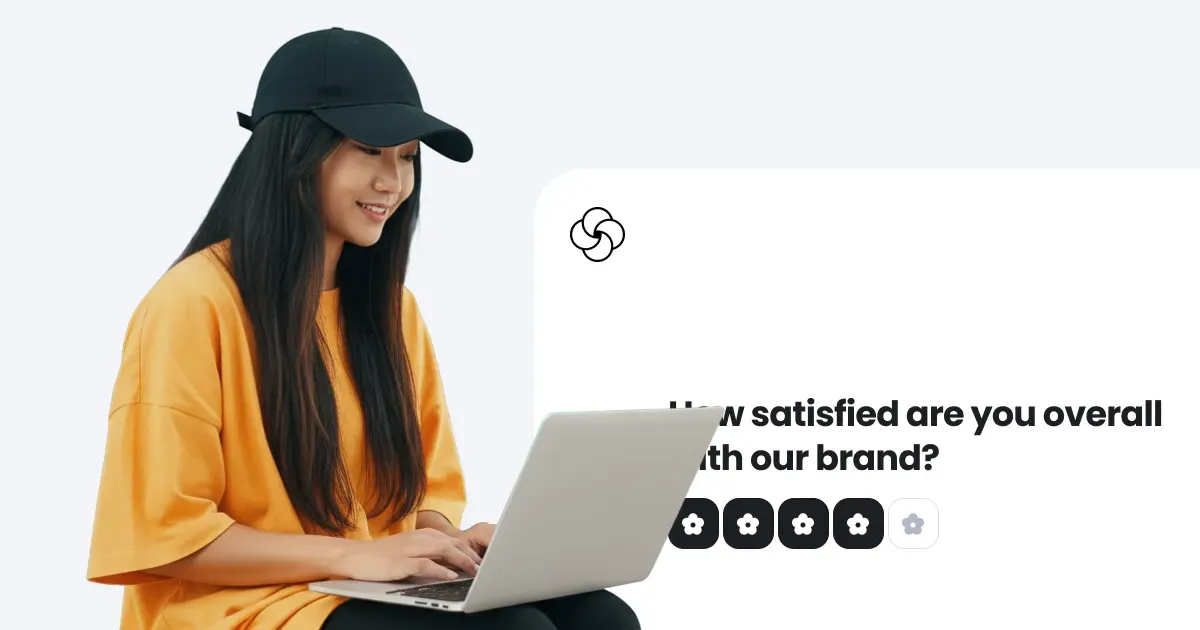
A survey is a customer touchpoint just like your website, newsletter, or landing page. And like every touchpoint, it either strengthens your brand or weakens it. A customer who receives a neutral, faceless form often can't connect it to your brand. Instead of a sense of continuity, they feel uncertainty and distance. The form looks generic, impersonal, as if anyone could have sent it. The customer feels no connection and has no reason to give it more attention. They often just skim through it quickly or close it altogether. On the other hand, a survey that visually builds on your brand evokes a completely different feeling: "Yes, this is the brand I know" or "They care about my opinion." With a survey, it's important to create an atmosphere where the customer doesn't perceive it as an annoying obligation but as a natural continuation of their experience with your brand. And it's exactly this feeling of trust and relevance that fundamentally determines whether they finish the survey or not.
A Survey's Visual Identity Isn't Just Cosmetics
When a survey looks like part of your company – with the same colors, the same font, the same tone of communication – the respondent immediately knows who's asking and why. Earning their trust right at the beginning is crucial. An anonymous form raises the question, "Who's even collecting this and what will they do with it?" – and that's a psychological barrier that reduces the willingness to answer honestly.
A branded survey, on the other hand, signals that you're asking seriously and that you'll take the answers seriously. This signal translates into two numbers that matter to a company:
Higher completion rate. Respondents are more likely to finish a survey that feels trustworthy.
Better-quality answers. When respondents feel they're dealing with a real company that means it, they answer more honestly and less formally.
And there's also a third benefit: every survey is another touchpoint with your brand, reinforcing its consistency and the overall impression in the customer's mind.
What to Customize in a Survey
1. Colors and Logo
A survey that uses your brand's colors and features your logo in the header immediately feels like a fully integrated part of your brand. Your visual identity should be consistently woven through every element – from the color scheme to the smallest UI details. From a brand experience perspective, this significantly enhances perceived credibility, professionalism, and overall communication coherence.
Practical tip: If your brand has multiple logo variants (light and dark), always choose the one that ensures optimal contrast and readability in the specific survey environment. The right choice here isn't just an aesthetic question – it's a detail that determines whether the survey feels like a thoughtful brand touchpoint.
2. Font
A custom font is one of the strongest visual elements of a brand. If you use a specific font across your website, email marketing, and marketing materials, your survey shouldn't be an exception. Even working with available styles like bold or capital letters helps maintain visual consistency. A generic-looking form, on the other hand, instantly reveals that it comes from an external tool, and your brand's overall impression loses cohesion.
3. Welcome and Thank-You Screens
This is where the first and last impressions are made – and these two moments fundamentally affect survey completion rates. Most respondents decide within seconds whether they'll even start filling out the form. From a UX and brand experience perspective, the welcome and thank-you screens aren't just an add-on but key points of the entire interaction.
The welcome screen is the entry gate to your survey and should function as a natural introduction to your brand's communication. The text should match your company's tone of voice – the way you speak to customers across all channels.
It's important to clearly communicate:
- Who's asking (brand identity)
- Why you're asking (context and purpose of collecting feedback)
- How long the survey will take (lowering the entry barrier)
By doing so, you set expectations and significantly increase the likelihood that the respondent will complete the survey.
The thank-you screen is often underestimated, yet it's a powerful brand moment. It's part of the overall impression. From a marketing perspective, it's the closing of a micro-conversion that influences how the customer remembers the entire interaction with the brand and the feeling they walk away with.
You can use it to:
- Thank them in your brand's tone
- Strengthen the relationship with the customer
- Guide them to the next step (e.g., product, website, newsletter)
4. Images and Visual Elements
Images in a survey aren't just visual decoration. When used strategically, they become a tool that increases completion rates, speeds up decision-making, and reinforces the brand experience at every step of the form.
In SentiSnap, you have an integrated image library available right in the editor, but you can also work with your own brand assets. If you have product photos or your brand's visual identity, you can upload them and use them systematically across all your surveys. This creates a consistent visual ecosystem in which every survey naturally fits into your brand.
Where images have the biggest impact:
Product or variant rating
Instead of text-based selection, you let respondents work with visual options. Decision-making is faster, more intuitive, and much closer to real purchasing behavior.
Visual preferences and concept testing
Questions like "Which variant of packaging / design / campaign appeals to you most?" gain significantly higher informational value and engagement when delivered in image form.
Welcome and thank-you screens
A brand-aligned image can turn a survey into a complete experience. The closing then doesn't feel like a technical end but a natural conclusion of the interaction with your brand – with a thank-you that reinforces positive brand recall.
5. Tone of Communication
Branding isn't just visual identity – it's also a consistent tone of voice across all customer touchpoints. It fundamentally affects how the brand is perceived: whether it's trustworthy, human, expert – or distant and impersonal.
Your tone of voice in a survey should be fully aligned with your brand's communication strategy. If your brand uses an informal, conversational style (casual address, simple language, lightness), a formally structured survey with rigid phrasing breaks the consistency of brand experience. On the other hand, for formal brands, overly relaxed language can lower the perception of professionalism and credibility.
From a marketing perspective, this is about ensuring brand voice consistency throughout the entire customer journey. The survey thus becomes a fully-fledged brand touchpoint, not just a functional collection tool. A well-tuned tone of voice increases clarity, strengthens emotional connection, and supports higher completion rates and better-quality data.
What Companies Gain
A branded survey isn't just a better-looking form. It's an investment that pays off in three areas:
Higher completion rate
Respondents are far more likely to finish a survey that feels trustworthy, professional, and "belongs" to a specific brand. As soon as the form ties in with familiar visual style and tone of voice, the sense of uncertainty drops and willingness to continue rises. In practice, companies often see a noticeable increase in completed responses – the difference can reach tens of percent.
Better-quality, more usable data
People approach a branded survey more seriously. The result is more thoughtful, more specific, and less "rushed" answers. This significantly improves the quality of data you work with afterwards – and with it, the accuracy of decision-making in marketing, product, or customer care.
Consistent brand experience
Every survey is part of the customer journey. If it maintains a unified visual identity and tone of voice, it strengthens the overall perception of your brand as a stable and professional partner. The survey thus stops being an isolated tool and becomes a fully-fledged brand touchpoint that supports trust and brand recall.
Build Surveys in Your Company's Brand with SentiSnap
In this article, we've shown how custom colors, logos, fonts, branded welcome and thank-you screens, and the use of images all influence how your brand is perceived in a survey. Each of these elements helps turn an ordinary form into a consistent brand experience that increases trust, engagement, and completion rates. Start building surveys that not only collect data but also strengthen your brand at every interaction. With SentiSnap, you can easily design a branded survey in just a few minutes. Build surveys for free with SentiSnap.

Lucie Smejkalova
Lucie has been helping companies better understand their customers and target audiences for over 5 years. She enjoys analyzing feedback from social media, media, and surveys. In her articles, she shows how to turn data into useful insights and how to make better decisions based on feedback.
